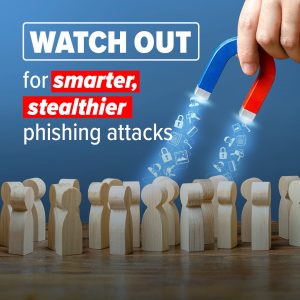
You get an email that looks totally normal. Maybe it’s a link to a file in Google Drive or Dropbox. Something your team uses every day. You click it. It opens a familiar-looking page… then maybe a CAPTCHA… then a login screen. Everything seems legit. But behind the scenes, that link has quietly funnelled you through a chain of trusted services, ending on a fake page designed to steal your password.
By the time you realise what’s happened, your credentials are gone. And someone else may be snooping around your inbox or cloud storage. and these attacks often bypass traditional security tools.
⚠️ They come from trusted domains
⚠️ They pass email filters
⚠️ They don’t trigger antivirus or malware alerts
⚠️ And they use everyday web features like CAPTCHAs to seem more legit
Even the most layered security setup can miss this. Why? Because the tools are looking for bad domains or files. Not good-looking sites doing odd things.
So, what can you do? The browser, the place where this all unfolds, is now the front line. If your security isn’t watching what people are doing in the browser, you might never see these threats coming.
And for you, the business owner, this is a good reminder that phishing is about trust being manipulated.
Training your staff is still important. But equally vital is making sure your IT team or support provider is protecting where the action really happens – in your browser. We can help, get in touch.